
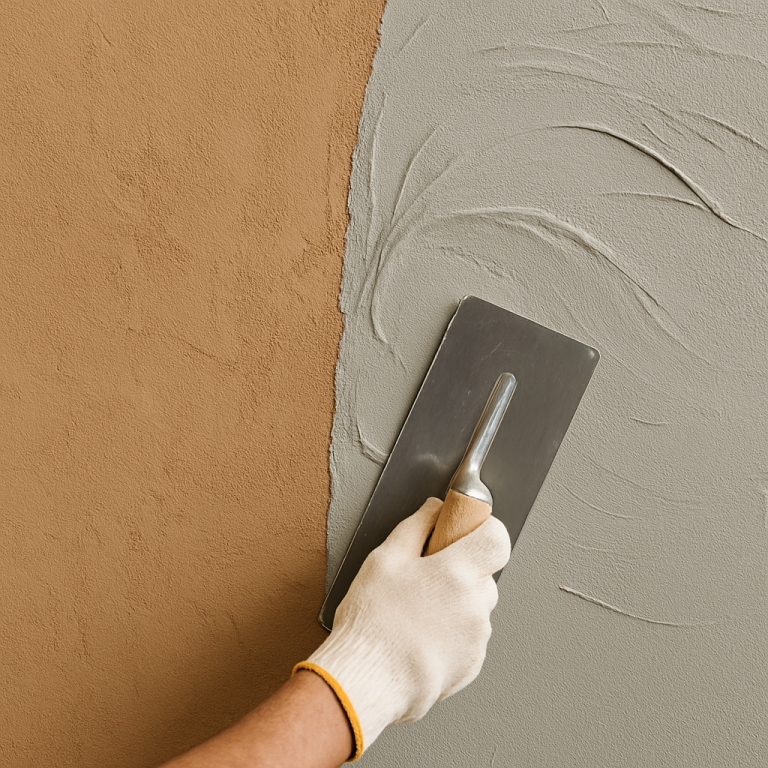
In 2025, building and interior design professionals are faced with increasingly demanding criteria: durability, air quality, comfort, environmental performance, aesthetics... Faced with these challenges, two major options are emerging for wall coverings: eco-friendly paint and biosourced plaster.
But how do you choose the solution best suited to your project? In this comparison, we review their characteristics, uses, advantages and limitations, to help architects, craftsmen and specifiers make the right choice.
🧱 Composition and environmental impact
| Criteria | Biobased plaster (e.g. Absolin) | Ecological paint |
|---|---|---|
| Origin of components | Linen, lime, marble powder, clay | Plant-based binders, mineral pigments, natural solvents |
| Biosourced? | ✅ Yes, highly biosourced | ✅ Yes, depending on the formulation |
| VOC emissions | Very low to nil (class A+) | Low (depending on certification) |
| Manufacturing | In France (in the case of Absolin) | Varies by brand |
👉 For projects aiming for environmental excellence (RE2020, BBCA), biosourced rendering represents a highly relevant solution.
🎨 Decorative rendering and customization
| Aspect | Biobased plaster | Ecological paint |
|---|
| Texture | Deep matte, textured, mineral look | Smooth, satin or matte depending on product |
| Colors | Mineral shades, natural pigments | Wider palette, more intense shades possible |
| Singularity | Handcrafted finish, unique wall | Uniform, more standardized rendering |
👉 For high-end or heritage architectural projects, biosourced plaster helps create singular, lively atmospheres.
🛠 Application and installation conditions
| Parameter | Biobased plaster | Ecological paint |
|---|
| Application | Trowel, float, roller (depending on product) | Roller or spray gun |
| Substrate preparation | Neat, compulsory diagnosis | Less demanding (but necessary) |
| Drying time | 24 to 72 hours depending on conditions | Fast (a few hours) |
👉 Biosourced plaster requires more know-how but offers a durable and highly rewarding result.
🧽 Care and durability
| Criteria | Biobased plaster | Ecological paint |
|---|
| Washability | Average to good depending on finish | Good, depending on quality |
| Resistance to weathering | Excellent, natural patina | Medium, needs regular touch-ups |
| Distribution | Invisible localized touch-ups | Visible touch-ups on large surfaces |
👉 In professional environments (hotels, offices, stores), biosourced plaster is a long-lasting, hard-wearing choice.
⚖ For what types of projects?
| Usage | Biobased plaster | Ecological paint |
|---|
| Old buildings / heritage | ✅ Ideal | ❌ Often unsuitable |
| ERP (crèches, schools, hospitals) | ✅ IAQ compatible | ✅ Also suitable |
| High-end living | ✅ Customized aesthetics | ✅ More economical |
| Fast construction / low budget | ❌ Less suitable | ✅ Fast and affordable |
👉 Each solution has its strengths, but biosourced rendering meets more demanding architectural requirements.
The choice between eco-friendly paint and biobased plaster depends on the project's priorities: budget, aesthetics, timeframe, level of environmental performance.
For professionals seeking durability, character and optimum indoor air quality, biobased plaster like Absolin is positioned as a material of the future.
In 2025, it's no longer a question of following a trend, but of making a technical and responsible choice, in the service of healthier, more beautiful and more sustainable construction.