
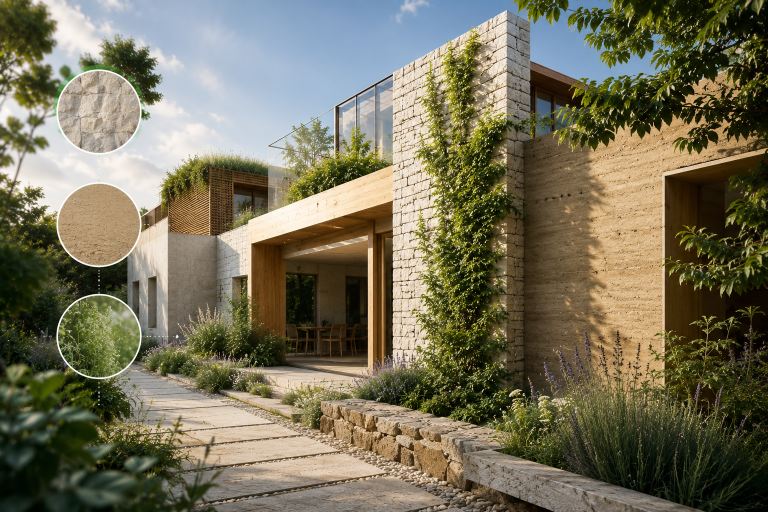
A subtle yet profound evolution in interior design
For several years now, professionals in the fields of architecture and interior design have been observing a gradual shift in client expectations.
For a long time, contemporary projects have been dominated by:
- very smooth surfaces,
- standardized materials,
- ultra-uniform finishes,
- and a strongly industrial approach.
Today, another trend is gradually gaining ground.
Architects are increasingly bringing back:
- mineral substances,
- natural textures,
- plant materials,
- and more vibrant finishes in their projects.
This trend is not merely a passing aesthetic fad.
It reflects a broader area of research focused on:
- interior comfort,
- perceived quality,
- sustainability,
- and the emotional connection to spaces.
In this context, bio-based wall coverings are becoming increasingly common in residential, commercial, and hotel projects.
Today, overly standardized spaces are showing their limitations
For several years, the market has largely favored:
- uniformity,
- speed of execution,
- the standardization of finishes,
- and highly processed materials.
This approach addressed the following challenges:
- productivity,
- rationalization,
- costs,
- and ease of implementation.
But it has also created spaces that are often perceived as:
- cold,
- impersonal,
- or visually repetitive.
In many recent projects, architects are now seeking to recreate:
- of matter,
- the terrain,
- depth,
- and a more organic feel in interiors.
Mineral and plant-based materials are exactly what we're looking for.
Users are looking for more than just visual appeal
Expectations are changing significantly in:
- housing,
- the hotel industry,
- the offices,
- restaurants,
- premium spaces,
- and places open to the public.
Users no longer judge a space solely on:
- its modernity,
- or its visual appearance.
They're also looking for:
- an atmosphere,
- a feeling,
- overall comfort,
- and an emotional coherence to the setting.
The texture of a wall,
the way light catches on a surface,
the depth of a material,
the feeling of warmth or calm
are now fully engaged in the experience of these spaces.
The return of natural materials reflects a quest for authenticity
In many contemporary projects, architects seek to reintroduce materials capable of creating:
- a more natural visual appearance,
- a sense of real texture,
- and a less artificial aesthetic.
Mineral substances often provide:
- nuances,
- irregularities that are under control,
- a depth,
- and a surface resonance that is difficult to achieve with highly synthetic materials.
This aspect is particularly sought after in:
- hotels,
- reception areas,
- premium stores,
- restaurants,
- or high-end residential projects.
Because customers now want spaces that feel more “alive.”
Plant-based materials are also making a comeback in architectural thinking
Alongside mineral materials, plant-based materials are gradually regaining their place in contemporary projects.
This trend is part of several broader trends:
- the search for more sustainable materials,
- interest in low-carbon solutions,
- interior comfort,
- and a commitment to limiting certain synthetic ingredients.
Today, architects are looking for materials that can combine:
- performance,
- aesthetics,
- and environmental sustainability.
Eco-friendly wall coverings made from mineral and plant-based components partially meet this demand.
Light plays a central role in this evolution
One of the most important factors in the return to natural materials is light.
Very smooth, uniform surfaces often produce a very flat light reflection.
Conversely, textured fabrics create:
- variations,
- shadows,
- from the depths,
- and a more vivid sense of space.
Architects are increasingly making use of this interaction between:
- material,
- texture,
- and light
to add more character to the spaces.
This is particularly evident in projects where atmosphere becomes a central element of the user experience.
Sensory comfort is becoming a priority
Advances in materials are not driven solely by technical or environmental considerations.
It also reflects a shift in our relationship with spaces.
Users are now looking for environments that can provide:
- a soothing sensation,
- acoustic comfort,
- a warmer atmosphere,
- and a better quality of life on a daily basis.
This approach applies equally to:
- housing,
- as well as the offices,
- hotels,
- or establishments open to the public.
Mineral and plant-based materials often contribute to this pursuit of sensory comfort through:
- based on their texture,
- their lifelike appearance,
- and their natural behavior in space.
Environmental considerations also influence decisions
Alongside aesthetic considerations, environmental concerns are playing an increasingly important role in architectural projects.
Today, architects must incorporate:
- RE2020,
- low-carbon goals,
- the durability of materials,
- and the environmental expectations of project owners.
This trend naturally leads to solutions that can offer:
- a more responsible approach,
- better traceability,
- and overall consistency in the project.
Bio-based materials and eco-friendly renovation solutions are part of this trend.
Architects are also looking for materials that will stand the test of time
One of the pitfalls of interior design trends is that they quickly go out of style.
Many finishes that are very “trendy” don’t hold up well visually after a few years.
Conversely, mineral and plant-based materials often have a more timeless aesthetic.
Their style changes less drastically with trends.
This aesthetic durability is important in:
- premium projects,
- business spaces,
- and buildings designed to last.
Project owners are now looking for materials that can retain:
- their visual consistency,
- their perceived quality,
- and their stability over time.
The Return of Craftsmanship and Expertise
The use of more organic materials also puts the applicator's touch back at the heart of the project.
With bio-based wall coverings, the final look depends heavily on:
- preparing the surface,
- of the implementation,
- from reading the wall,
- and attention to detail.
Two applications of the same material can produce very different results.
This reality restores value:
- expertise,
- in terms of technical expertise,
- and the on-site experience of applicators.
In high-end projects, this expertise becomes a key differentiator.
A New Approach to Indoor Quality
The quality of a space is no longer limited to:
- based on its appearance,
- or its technical performance.
Architects are now considering a more comprehensive approach that incorporates:
- aesthetics,
- comfort,
- the sensations,
- indoor air quality,
- acoustics,
- and the overall experience of the occupants.
The materials used play a direct role in this process.
That is why mineral and plant-based materials are gradually returning to the forefront of contemporary projects.
Hotel and commercial real estate projects are accelerating this trend
Sectors:
- in the hospitality industry,
- premium office spaces,
- coworking,
- and reception areas
play an important role in this development today.
These places aim to create:
- memorable experiences,
- distinctive atmospheres,
- and cozier spaces.
Bio-based materials often offer the following benefits:
- a visual identity,
- a texture,
- and a more qualitative perception of spaces.
The choice of materials thus becomes a strategic element in shaping the venue's image.
In 2026, the return of mineral and plant-based materials to architectural projects reflects a profound shift in market expectations.
Architects are no longer looking solely for:
- high-performance materials,
- or standardized finishes.
They are now seeking to design spaces that can combine:
- comfort,
- aesthetics,
- sustainability,
- perceived quality,
- and environmental sustainability.
Bio-based wall coverings respond to this trend by offering:
- a more vibrant material,
- a more sensory approach,
- and a design approach that places greater emphasis on interior comfort.
This trend goes far beyond mere decoration.
It reflects a new way of thinking about spaces: one that is more sustainable, more human-centered, and more attuned to the actual experience of the occupants.