
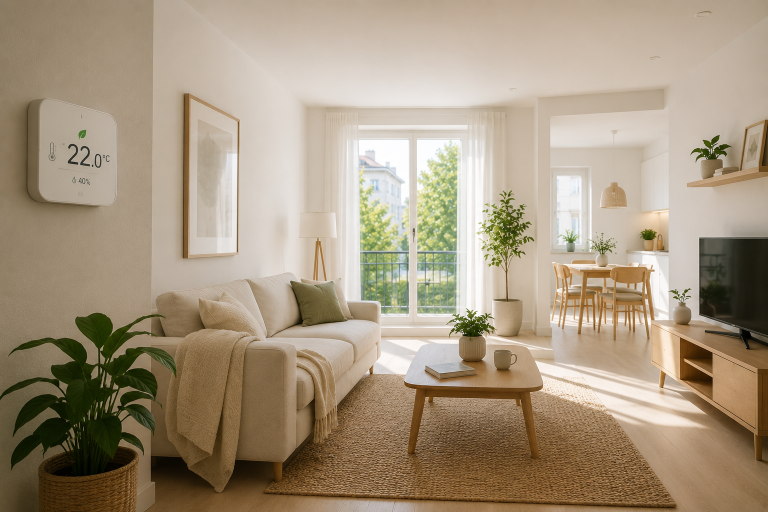
Indoor air quality has become a key issue in the building industry
For a long time, in construction and renovation projects, the focus was primarily on:
- material strength,
- thermal performance,
- aesthetics,
- turnaround times,
- or implementation costs.
Today, another issue is becoming increasingly important: indoor air quality.
This topic now applies to:
- architects,
- the project managers,
- construction companies,
- local governments,
- schools,
- the hotel industry,
- the offices,
- but also individuals who have become much more mindful of their everyday surroundings.
Expectations are changing rapidly.
Users no longer want just spaces that are beautiful or energy-efficient.
They're also looking for:
- healthier environments,
- more sustainable materials,
- a better quality of life,
- and lasting comfort in everyday life.
In this context, the choice of finishes and materials becomes a strategic decision.
We spend most of our time indoors
This is a reality that is often underestimated.
Today, most people spend a very large portion of their time indoors:
- housing,
- offices,
- schools,
- hotels,
- stores,
- transportation,
- establishments open to the public.
However, indoor air can sometimes be more polluted than outdoor air.
This invisible pollution comes from many sources:
- paintings,
- glues,
- solvents,
- furniture,
- cleaning products,
- synthetic materials,
- chemical compounds that are gradually released into the air.
For several years, these issues received relatively little attention in public discourse.
But health and environmental requirements have changed significantly.
VOCs: An Issue We Can No Longer Ignore
When discussing indoor air quality, professionals often hear about VOCs—
, or volatile organic compounds.
These substances can be emitted by various materials used in construction.
Some emissions are temporary.
Others may persist for much longer.
The compounds being monitored include, among others:
- formaldehyde,
- benzene,
- certain solvents,
- or other chemicals used in industrial formulations.
The problem is that these emissions are often invisible.
A space may look clean and new but still have poor air quality.
Customer expectations have changed
Construction professionals are now seeing a clear shift in customer demands.
In recent projects, the questions no longer focus solely on:
- the colors,
- textures,
- or the budget.
Customers also ask:
- what materials are used,
- where they come from,
- what they emit,
- how they age,
- and how they affect indoor comfort.
This trend particularly affects:
- families,
- schools,
- hotels,
- treatment areas,
- the offices,
- high-end projects,
- and buildings designed with wellness in mind.
Perceived comfort is no longer limited to aesthetics.
It now includes:
- the sense of space,
- the breathability of materials,
- humidity,
- acoustics,
and the overall perception of the indoor environment.
Bio-based materials are playing an increasingly important role
In response to these new expectations, bio-based materials and eco-friendly renovation solutions are gradually gaining ground.
This trend can be attributed to several factors:
- RE2020,
- low-carbon goals,
- the search for more sustainable materials,
- the desire to restrict certain chemical compounds,
- and the growing need for indoor comfort.
Professionals are now looking for materials that can combine:
- performance,
- aesthetics,
- sustainability,
- and environmental sustainability.
With this in mind, mineral and plant-based materials are once again taking center stage in many projects.
In response to these new expectations, bio-based materials and eco-friendly renovation solutions are gradually gaining ground.
This trend can be attributed to several factors:
- RE2020,
- low-carbon goals,
- the search for more sustainable materials,
- the desire to restrict certain chemical compounds,
- and the growing need for indoor comfort.
Professionals are now looking for materials that can combine:
- performance,
- aesthetics,
- sustainability,
- and environmental sustainability.
With this in mind, mineral and plant-based materials are once again taking center stage in many projects.
Indoor air quality is also becoming an economic issue
Many companies used to view indoor air quality as a secondary issue or one that was purely regulatory.
That is no longer the case.
Today, the perceived quality of a space directly influences:
- an institution's image,
- the comfort of the occupants,
- customer satisfaction,
- and sometimes even a place's commercial appeal.
In certain sectors such as:
- the hotel industry,
- premium spaces,
- the offices,
- or healthcare facilities,
The choice of materials plays a key role in the overall experience.
Project owners are therefore looking for solutions that can provide:
- environmental consistency,
- a better sense of space,
and add lasting value to the project.
The role of wall coverings is often underestimated
When it comes to indoor air quality, people often focus on:
- ventilation systems,
- technical equipment,
- or insulation.
But floor coverings also play an important role.
Walls account for a significant portion of a building's surface area.
The choice of materials used affects:
- potential emissions,
- hygrometric exchange,
- the perceived comfort,
- and the overall atmosphere of a space.
This is especially true of eco-friendly wall coverings made from mineral and plant-based materials.
Professionals must also consider true sustainability
Today, the market is saturated with “green” or “eco-friendly” rhetoric.
But in the real world of construction, professionals are primarily looking for:
- reliable materials,
- practical solutions,
- sustainable performance,
- and products that are tailored to the constraints of the field.
A material can have a strong environmental message while:
- not aging well,
- requiring a lot of maintenance,
- or creating significant implementation challenges.
True sustainability therefore becomes an essential criterion.
Construction companies no longer want just “marketing” products.
They want:
- stability,
- consistency,
- and overall performance over time.
Architects are bringing mineral and plant-based materials back into their designs
For several years now, we have been seeing a gradual return:
- natural textures,
- mineral substances,
- more vibrant surfaces,
- and less standardized finishes.
This movement is not merely a response to an aesthetic trend.
It also reflects a search for:
- sensory comfort,
- authenticity,
- breathing of spaces,
- and a better quality of life at home.
Architects and interior designers are increasingly looking for materials that can create:
- an atmosphere,
- a depth,
- a more organic sense of space.
Bio-based materials are part of the solution to this trend.
Thermal and acoustic comfort also come into play
Indoor air quality cannot be separated from other aspects of comfort.
Users now expect spaces to:
- visually appealing,
- acoustically comfortable,
- thermally stable,
- and more soothing in everyday life.
Mineral and plant-based materials can contribute to this pursuit of overall comfort thanks to their natural properties:
- humidity control,
- inertia,
- sound absorption,
- a warmer feel.
This approach is particularly important in:
- hotels,
- restaurants,
- coworking spaces,
- schools,
and places open to the public.
Implementation remains crucial
Choosing a high-performance material isn't enough.
The final quality also depends on:
- preparing the materials,
- site conditions,
- adherence to drying times,
- and the quality of the application.
If a material is not installed properly, it can lose much of its performance.
That is why companies are increasingly looking for:
- technical training,
- on-site support,
- and solutions tailored to the realities of the job site.
Improving the skills of applicators is becoming a major challenge in projects with stringent environmental requirements.
Regulations are also driving the market to evolve
With the RE2020 and changing environmental requirements, professionals must now incorporate:
- carbon footprint,
- the materials used,
- sustainability,
- and the usability of buildings.
Even though certain requirements have not yet been mandated everywhere, market dynamics are already in motion.
Clients are anticipating:
- future regulatory requirements,
- environmental criteria,
- and end-user requests.
Low-carbon materials and eco-friendly renovation solutions are therefore playing an increasingly important role in project specifications.
By 2026, indoor air quality will no longer be a secondary concern in the building industry.
It now influences:
- the choice of materials,
- customer expectations,
- architects' strategies,
- and the decisions made by the project owners.
In light of this trend, professionals need to take a more holistic approach to projects:
- comfort,
- sustainability,
- environmental impact,
- perceived quality,
- and consistency in the materials used.
Bio-based wall coverings are part of this trend, offering an approach that combines:
- mineral and plant matter,
- interior comfort,
- aesthetics,
- and sustainable environmental practices.
But beyond trends, one reality is gradually becoming clear:
the energy-efficient buildings of tomorrow will also need to be spaces that are pleasant to live in on a daily basis.